

Soviet Space Program Tsiklon-2A US-AO 3
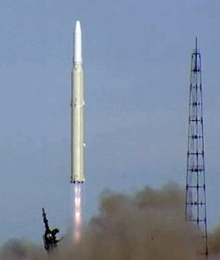
Tsiklon-2A


Status
Success
Date
27 DEC 1967
11:28

Mission Overview
US-A (Upravlenniye Sputnik Aktivny) were active radar satellites for ocean surveillance. The high power consumtion of the active radar required a nuclear reactor as power source. The satellites were known as RORSAT in the west. The US-AO series consisted of satellites, which tested all the system components but the nuclear reactor. They were battery powered.
Rocket
Tsiklon-2A
Mission Type
Government/Top Secret
Orbit
Low Earth Orbit
Stages
2
Livestream
Not availableRocket Details
The Tsyklon was a Soviet-designed expendable launch system, primarily used to put Cosmos satellites into low Earth orbit. It is based on the R-36 intercontinental ballistic missile designed by Mikhail Yangel and made eight launches, with seven successes and one failure. All of its launches were conducted from LC-90 at the Baikonur Cosmodrome. It is sometimes designated Tsyklon-2A, not to be confused with the later Tsyklon-2 rocket. It was introduced in 1967 and was derived from the R-36 ICBM (NATO designation SS-9 Scarp). It was retired in 1969.
Height
39.7 m
Diameter
3 m
Launch Mass
182 T
Thrust
2,366 kN