

NASA Redstone MRLV Mercury-Redstone 4
Redstone MRLV

Status
Success
Date
21 JUL 1961
12:20
Launch Provider

National Aeronautics and Space Administration
Launch Pad
Launch Complex 5
Cape Canaveral SFS, FL, USA
Mission Overview
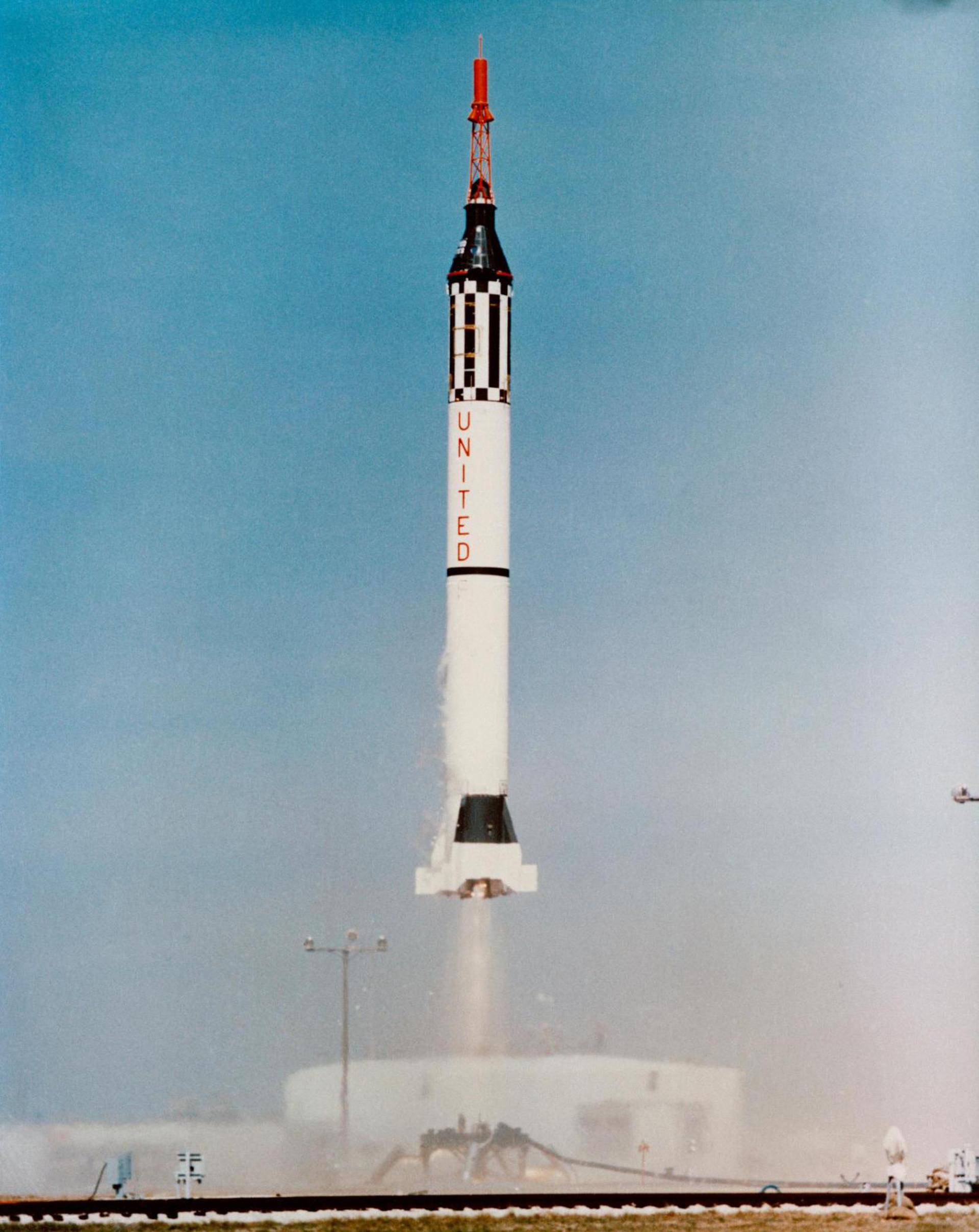
Mercury-Redstone 4 was the second United States human spaceflight, on July 21, 1961. The suborbital Project Mercury flight was launched with a Mercury-Redstone Launch Vehicle, MRLV-8. The spacecraft, Mercury capsule #11, was nicknamed the Liberty Bell 7, and it was piloted by the astronaut Virgil "Gus" Grissom.
Rocket
Redstone MRLV
Mission Type
Human Exploration
Orbit
Suborbital
Stages
1
Livestream
Rocket Details
The Mercury-Redstone Launch Vehicle, designed for NASA's Project Mercury, was the first American manned space booster. It was used for six sub-orbital Mercury flights from 1960–61; culminating with the launch of the first, and 11 weeks later, the second American (and the second and third humans) in space. The four subsequent Mercury human spaceflights used the more powerful Atlas booster to enter low Earth orbit. A member of the Redstone rocket family, it was derived from the U.S. Army's Redstone ballistic missile and the first stage of the related Jupiter-C launch vehicle; but to human-rate it, the structure and systems were modified to improve safety and reliability.
Height
25.41 m
Diameter
1.78 m
Launch Mass
30 T