

ISRO PSLV XL Aditya-L1
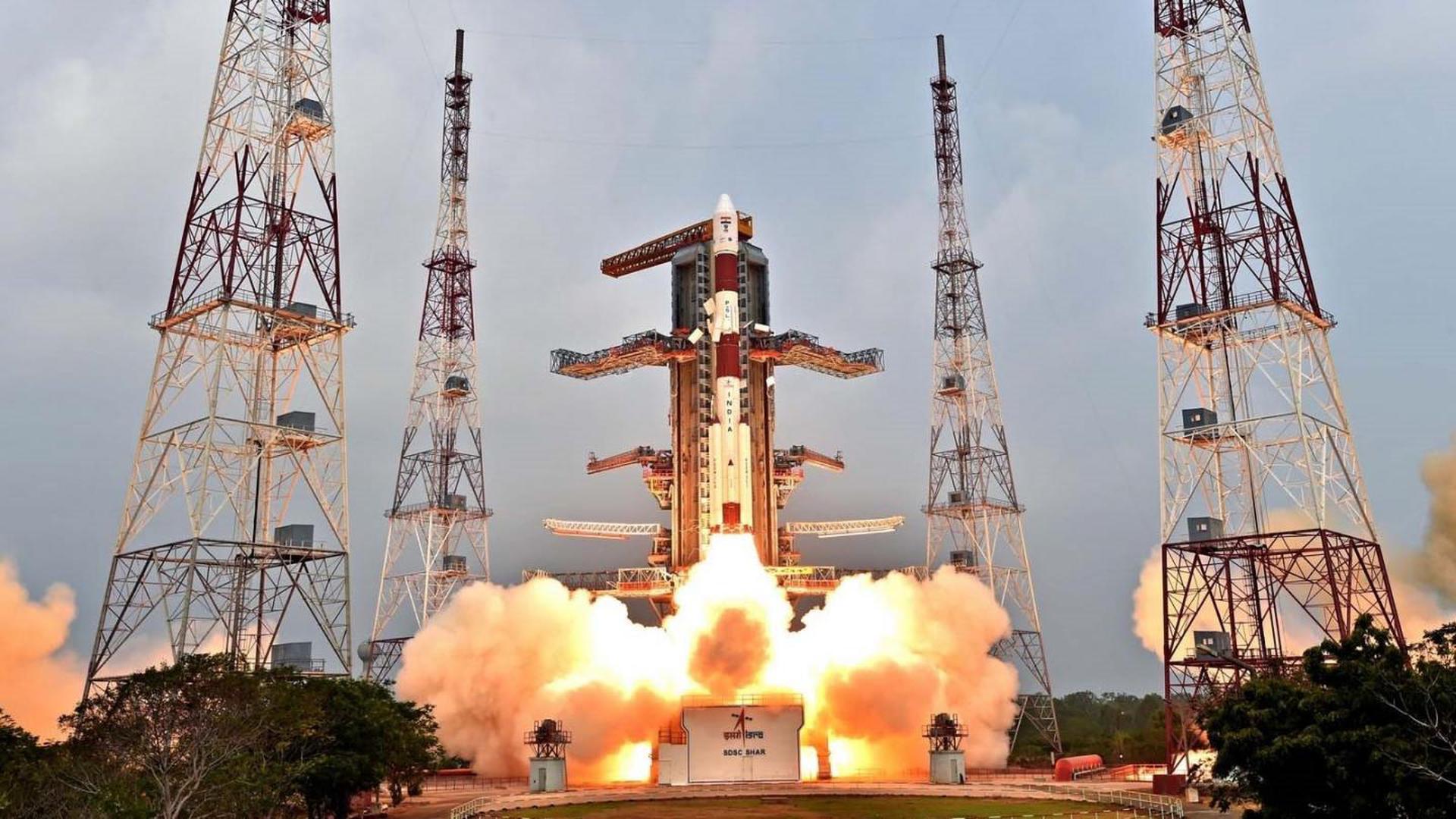
PSLV XL


Status
Success
Date
2 SEP 2023
06:20
Launch Provider

Indian Space Research Organization
Launch Pad
Satish Dhawan Space Centre Second Launch Pad
Satish Dhawan Space Centre, India
Mission Overview
Aditya L1 is an Indian solar observation satellite to be placed at the Sun-Earth Lagrangian point L1. The major scientific objectives of the mission are to achieve a fundamental understanding of the physical processes that heat the solar corona, accelerate the solar wind and produce Coronal Mass Ejections (CMEs). Originally the mission design started as a small LEO satellite carrying only a coronagraph as a payload. In order to get the best science from the Sun, continuous viewing of the Sun is preferred. A Satellite placed in the halo orbit around the L1 Lagrangian point of the Sun-Earth system has the major advantage of continuously viewing the Sun without any occultation/ eclipses.
Rocket
PSLV XL
Mission Type
Heliophysics
Orbit
Heliocentric L1
Stages
4
Livestream
Rocket Details
PSLV-XL is the upgraded version of Polar Satellite Launch Vehicle in its standard configuration boosted by more powerful, stretched strap-on boosters with 12 tonne propellant load. Weighing 320t at lift-off, the vehicle uses larger strap-on motors (PSOM-XL or S12) to achieve higher payload capability. On 29 December 2005, ISRO successfully tested the improved version of strap-on booster for the PSLV. The first use of PSLV-XL was the launch of Chandrayaan-1 by PSLV C11. The payload capability for this variant is 1,800 kg to SSO.
Height
44 m
Diameter
2.8 m
Launch Mass
320 T