

CASC Long March 2C Einstein Probe
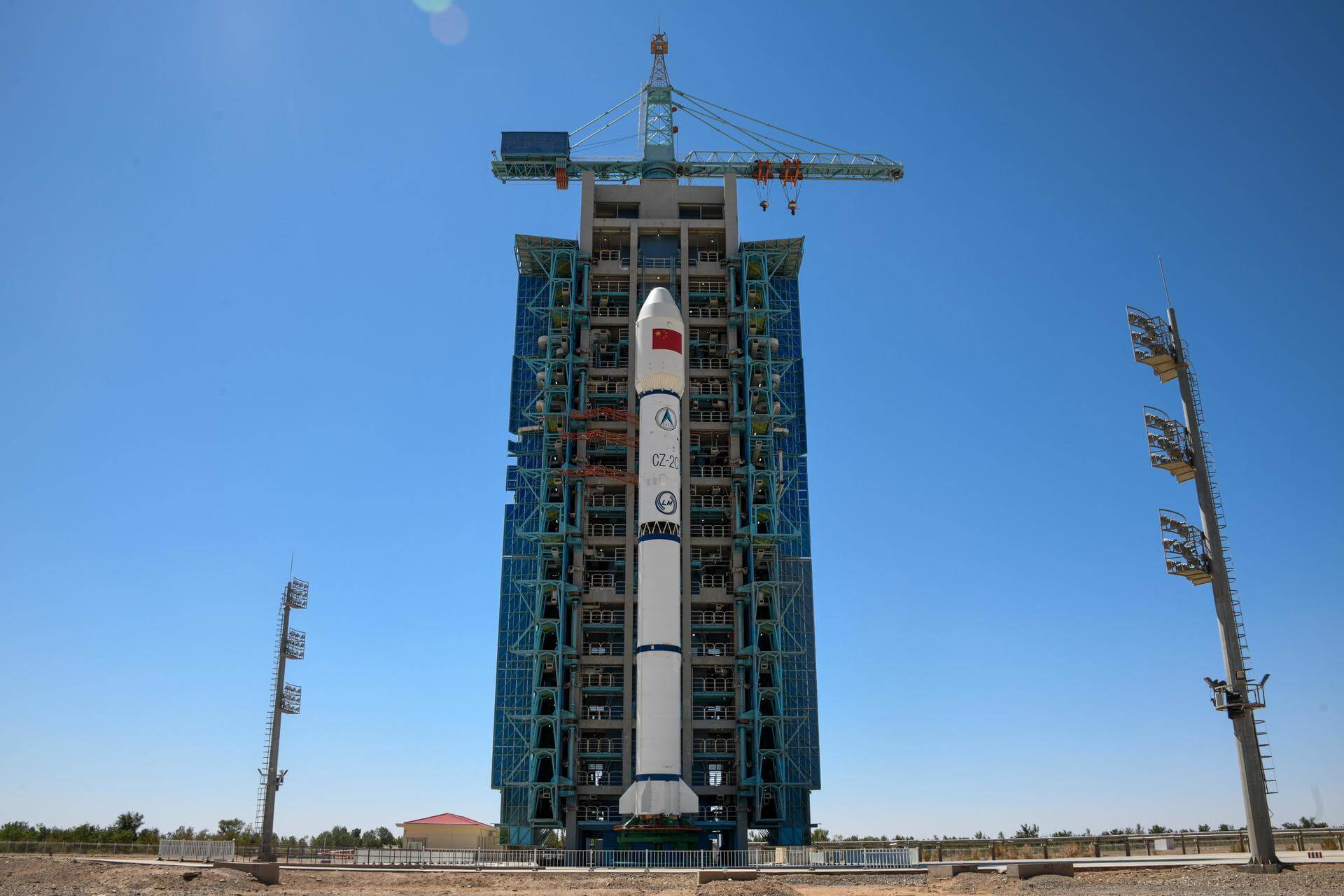
Long March 2C


Status
Success
Date
9 JAN 2024
07:03
Launch Provider

China Aerospace Science and Technology Corporation
Launch Pad
Launch Complex 3 (LC-3/LA-1)
Xichang Satellite Launch Center, People's Republic of China
Mission Overview
The Einstein Probe (EP) is a Chinese Wide-Field X-ray astronomy observatory for detecting high energy flashes of cataclysmic cosmic events. These includes tidal disruption events (stars pulled apart by supermassive black holes), supernovae, and high-energy, electromagnetic counterparts of gravitational wave events. The spacecraft, weighing ~1400 kilograms, will be launched into a 600-kilometer-high, low-inclination orbit. The probe's instruments include a Wide-field X-ray Telescope (WXT) with a field of view of 3,600 square degrees, employing cutting-edge "lobster eye" optics to view X-ray events more deeply and widely than previously possible, and a Follow-up X-ray Telescope (FXT), developed in collaboration with Europe, that performs follow-up detailed observations as soon as WXT detects an X-ray event. The Einstein Probe mission is managed by the NSSC, with participation from the CAS's NAOC, the Institute of High Energy Physics (IHEP), the Shanghai Institute of Technical Physics (SITP), and the Innovation Academy for Microsatellites, a spacecraft manufacturer that has previously produced space science and Beidou navigation spacecraft. The European Space Agency is contributing to the mission with a mirror module for the FXT instrument, as well as ground station and science management support. The FXT instrument is also supported by Germany's Max Planck Institute for Extraterrestrial Physics.
Rocket
Long March 2C
Mission Type
Astrophysics
Orbit
Low Earth Orbit
Stages
2
Livestream