

MHI H3-22 VEP 4, CE-SAT-1E & TIRSAT
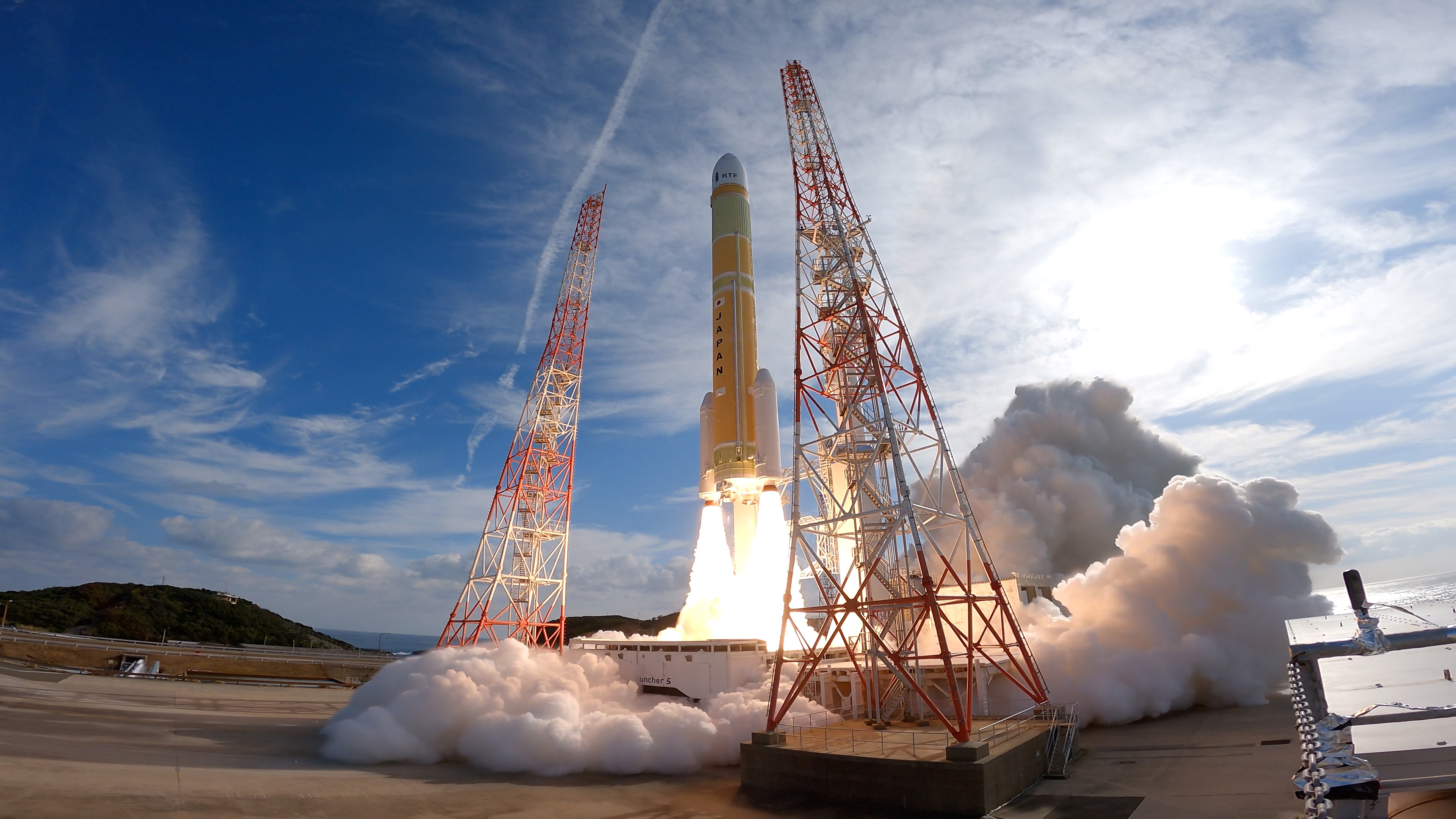
H3-22


Status
Success
Date
17 FEB 2024
00:22
Launch Provider

Mitsubishi Heavy Industries
Launch Pad
Yoshinobu Launch Complex LP-2
Tanegashima Space Center, Japan
Mission Overview
New test flight of the H3 ordered following the failure of the inaugural launch of H3 in March 2023 with ALOS-3. Main payload is VEP 4 (Vehicle Evaluation Payload 4), a 2.6 tonnes mass simulator payload that will be carried on the 2nd test flight of the H3 rocket, instead of the ALOS-4 Earth observation satellite as originally planned. It will be deployed after the 2nd de-orbit burn is completed to test the payload separation mechanism. 2 hitchhiking secondary payloads have been selected in June 2023: * CE-SAT-1E - 70 kilograms class optical Earth observation satellite from Canon Electronics Inc., similar to the previously launched CE-SAT-1. * TIRSAT - 3U cubesat by Japan Space Systems and other institutes to test an infrared sensor for Earth surface observation purposes.
Rocket
H3-22
Mission Type
Test Flight
Orbit
Sun-Synchronous Orbit
Stages
2
Livestream
Rocket Details
The H3 Launch Vehicle is a Japanese expendable launch system. Each H3 booster configuration has a two-digit and a letter designation that indicates the features of that configuration. The first digit represents the number of LE-9 engines on the main stage, either "2" or "3". The second digit indicates the number of SRB-3 solid rocket boosters attached to the base of the rocket, and can be "0", "2" or "4". All layouts of solid boosters are symmetrical. The letter in the end shows the length of the payload fairing, either short "S" or long "L". For example, an H3-24L has two engines, four solid rocket boosters, and a long fairing, whereas an H3-30S has three engines, no solid rocket boosters, and a short fairing.
Height
63 m
Diameter
5.27 m
Thrust
7,542 kN