

JAXA Epsilon ERG (Exploration of energization and Radiation in Geospace)
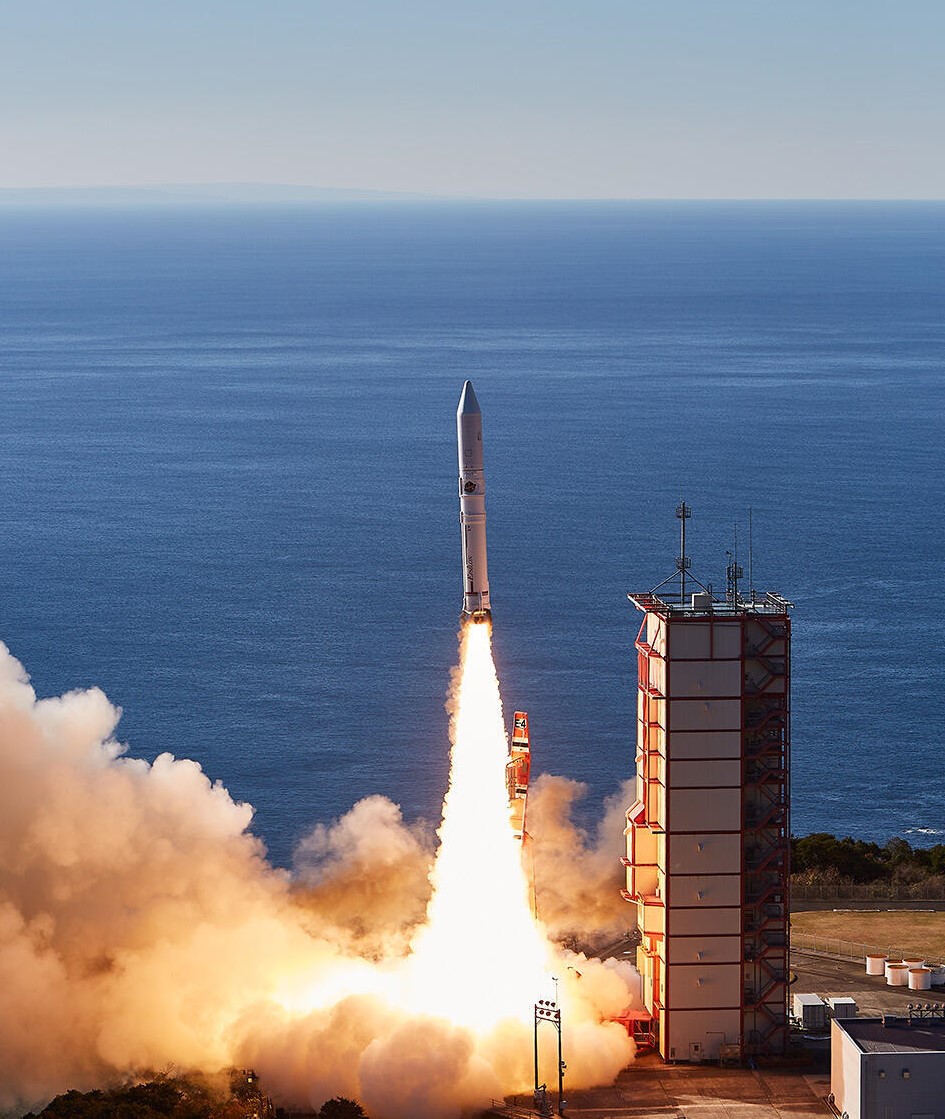
Epsilon


Status
Success
Date
20 DEC 2016
11:00
Launch Provider

Japan Aerospace Exploration Agency
Launch Pad
Mu Center
Uchinoura Space Center, Japan
Mission Overview
The ERG  (Exploration of energization and Radiation in Geospace) project is a mission to study the Van Allen belts. The task is to elucidate how highly charged electrons are born while they generate and vanish repeatedly along with space storms caused by the disturbance of solar wind, influenced by space storms, and how space storms are developed.
Rocket
Epsilon
Mission Type
Earth Science
Orbit
Elliptical Orbit
Stages
4
Livestream
Rocket Details
The Epsilon rocket is a Japanese solid-fuel rocket designed to launch scientific satellites. It is a follow-on project to the larger and more expensive M-V rocket which was retired in 2006. The Japan Aerospace Exploration Agency (JAXA) began developing the Epsilon in 2007. It is capable of placing a 590 kg payload into Sun-synchronous orbit.
Height
24.4 m
Diameter
2.5 m
Launch Mass
91 T
Thrust
2,271 kN