

ULA Atlas V 551 ViaSat-3 F2 (ViaSat-3 EMEA)
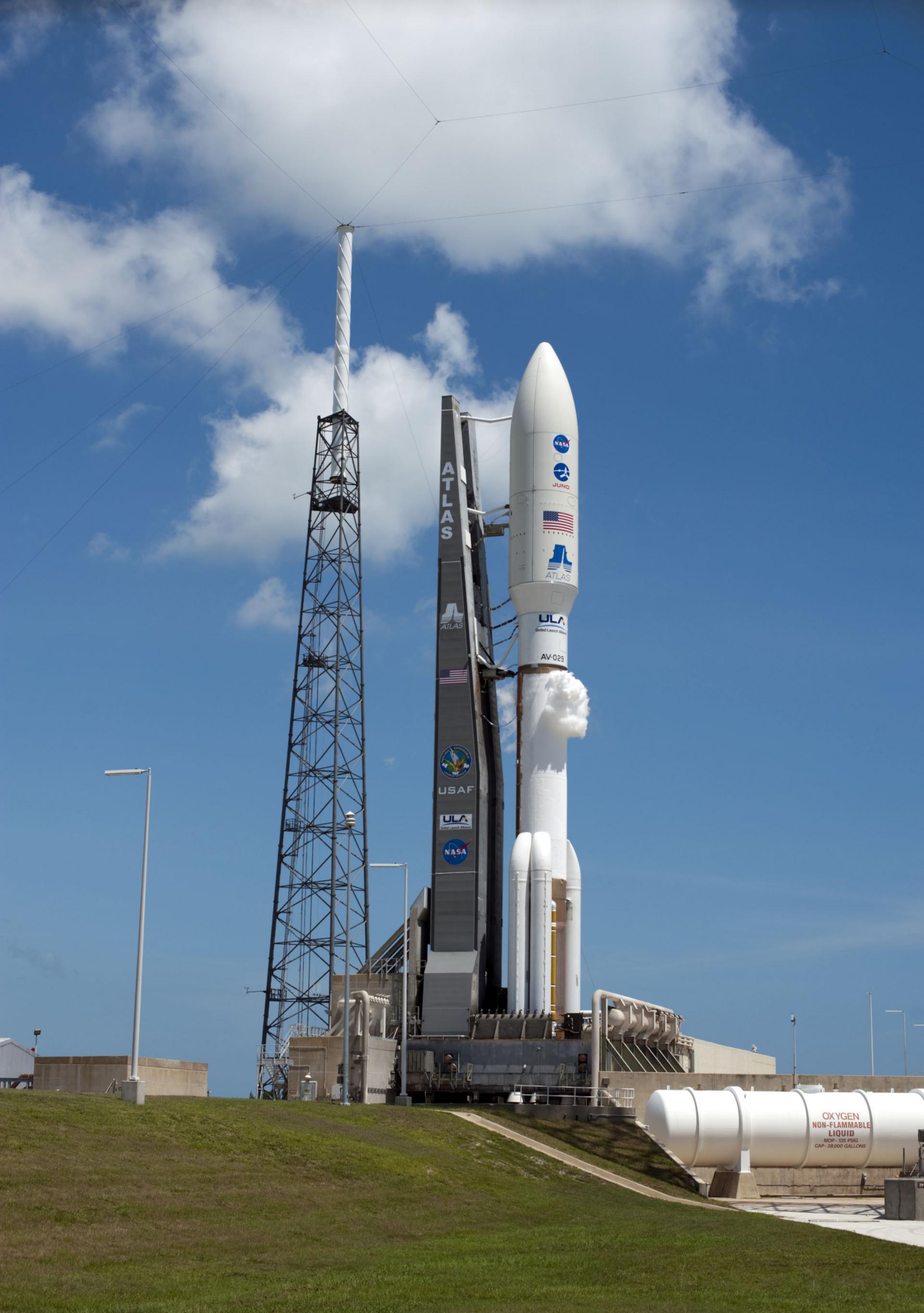
Atlas V 551


Status
Success
Date
14 NOV 2025
03:04
Launch Provider

United Launch Alliance
Launch Pad
Space Launch Complex 41
Cape Canaveral SFS, FL, USA
Mission Overview
The ViaSat-3 is a series of three Ka-band satellites is expected to provide vastly superior capabilities in terms of service speed and flexibility for a satellite platform. Each ViaSat-3 class satellite is expected to deliver more than 1-Terabit per second of network capacity, and to leverage high levels of flexibility to dynamically direct capacity to where customers are located.
Rocket
Atlas V 551
Mission Type
Communications
Orbit
Geostationary Transfer Orbit
Stages
2
Livestream
Rocket Details
Atlas V is an expendable launch system in the Atlas rocket family. It was formerly operated by Lockheed Martin and is now operated by United Launch Alliance (ULA), a joint venture with Boeing. Each Atlas V rocket uses a Russian-built RD-180 engine burning kerosene and liquid oxygen to power its first stage and an American-built RL10 engine burning liquid hydrogen and liquid oxygen to power its Centaur upper stage. The RD-180 engines are provided by RD Amross, while Aerojet Rocketdyne provides both the RL10 engines and the strap-on boosters used in some configurations. The standard payload fairing sizes are 4 or 5 meters in diameter and of various lengths. Fairings sizes as large as 7.2 m in diameter and up to 32.3 m in length have been considered. The rocket is assembled in Decatur, Alabama and Harlingen, Texas.
Height
59.7 m
Diameter
3.8 m
Launch Mass
573 T
Thrust
12,269 kN