

ULA Atlas V 551 Amazon Leo (KA-01)
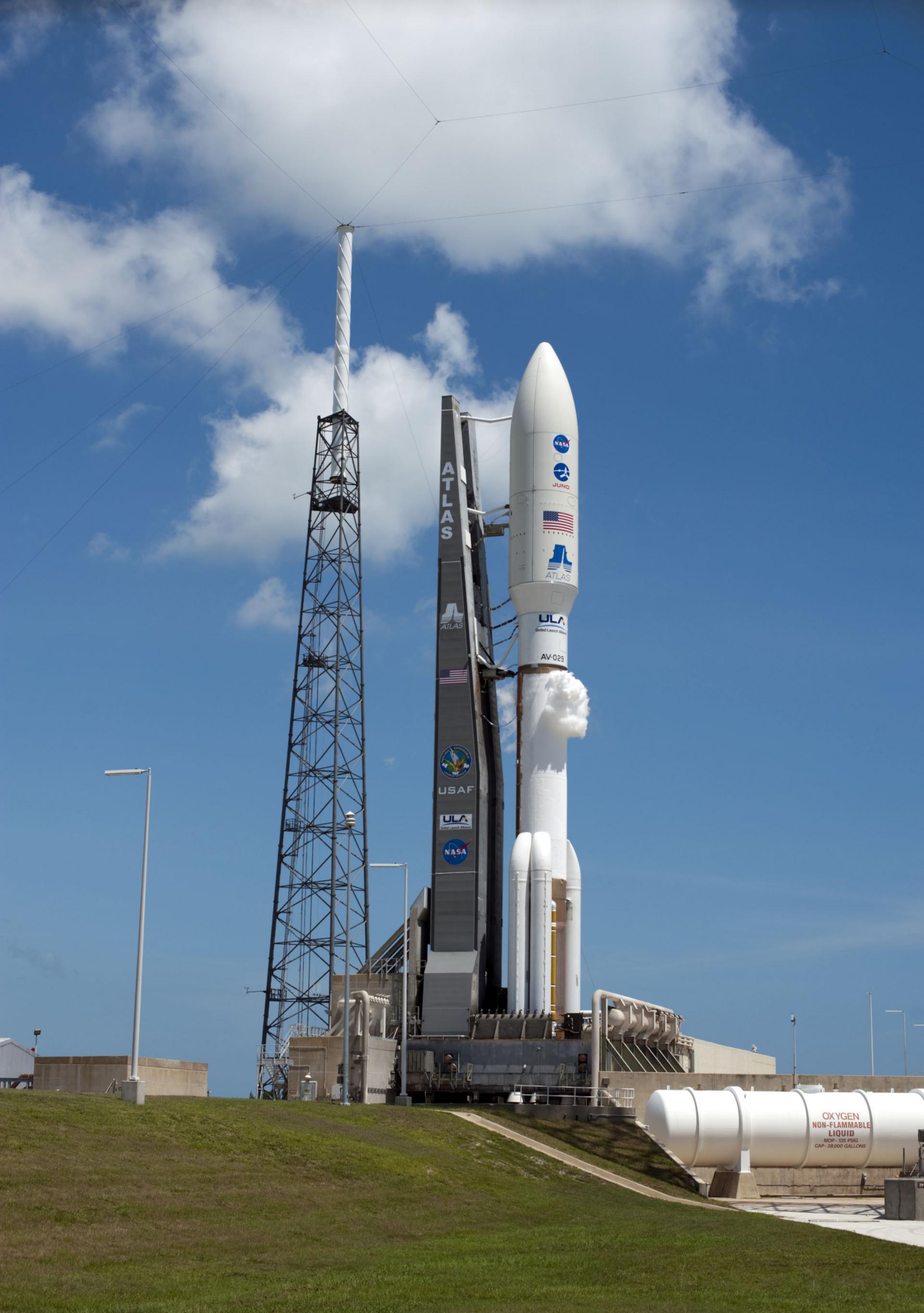
Atlas V 551


Status
Success
Date
28 APR 2025
23:01
Launch Provider

United Launch Alliance
Launch Pad
Space Launch Complex 41
Cape Canaveral SFS, FL, USA
Mission Overview
Amazon Leo, formerly known as Project Kuiper, is a mega constellation of satellites in Low Earth Orbit that will offer broadband internet access, this constellation will be managed by Kuiper Systems LLC, a subsidiary of Amazon. This constellation is planned to be composed of 3,276 satellites. The satellites are projected to be placed in 98 orbital planes in three orbital layers, one at 590 km, 610 km and 630 km altitude. 27 satellites are carried on this launch.
Rocket
Atlas V 551
Mission Type
Communications
Orbit
Low Earth Orbit
Stages
2
Livestream
Rocket Details
Atlas V is an expendable launch system in the Atlas rocket family. It was formerly operated by Lockheed Martin and is now operated by United Launch Alliance (ULA), a joint venture with Boeing. Each Atlas V rocket uses a Russian-built RD-180 engine burning kerosene and liquid oxygen to power its first stage and an American-built RL10 engine burning liquid hydrogen and liquid oxygen to power its Centaur upper stage. The RD-180 engines are provided by RD Amross, while Aerojet Rocketdyne provides both the RL10 engines and the strap-on boosters used in some configurations. The standard payload fairing sizes are 4 or 5 meters in diameter and of various lengths. Fairings sizes as large as 7.2 m in diameter and up to 32.3 m in length have been considered. The rocket is assembled in Decatur, Alabama and Harlingen, Texas.
Height
59.7 m
Diameter
3.8 m
Launch Mass
573 T
Thrust
12,269 kN